
Ayub Khan's Military Regime
In 1958 a military coup brought General Ayub Khan to power in Pakistan, opening an era of army rule (1958-69) that East Bengal would increasingly challenge.
Key Facts
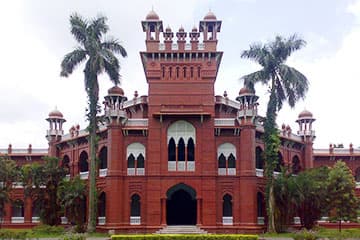
Curzon Hall, built in 1904, is one of the finest examples of Indo-Saracenic architecture in Dhaka.
Wikimedia CommonsTimeline Detail
The 1958 coup ended parliamentary politics in Pakistan and installed General Ayub Khan as head of the military regime.
Ayub's centralised, pro-development rule concentrated power in West Pakistan and marginalised East Pakistan's political voice.
His 'Basic Democracies' system of indirect elections was widely seen as a device to keep power out of popular reach.
The regime's refusal to recognise Bengali demands fuelled the movements that culminated in the 1969 uprising and eventually the Liberation War.
Army rule taught East Pakistan the price of voicelessness.
The marker is placed in Dhaka, since the regime governed all of Pakistan from the western wing.
Military rule from the west deepens the grievances behind the autonomy movement and 1971.
Willem van Schendel, A History of Bangladesh (Cambridge University Press, 2009)