
Mass Uprising
A mass uprising against authoritarian rule intensified Bengali political mobilization and helped reshape the road to the 1970 election.
Key Facts
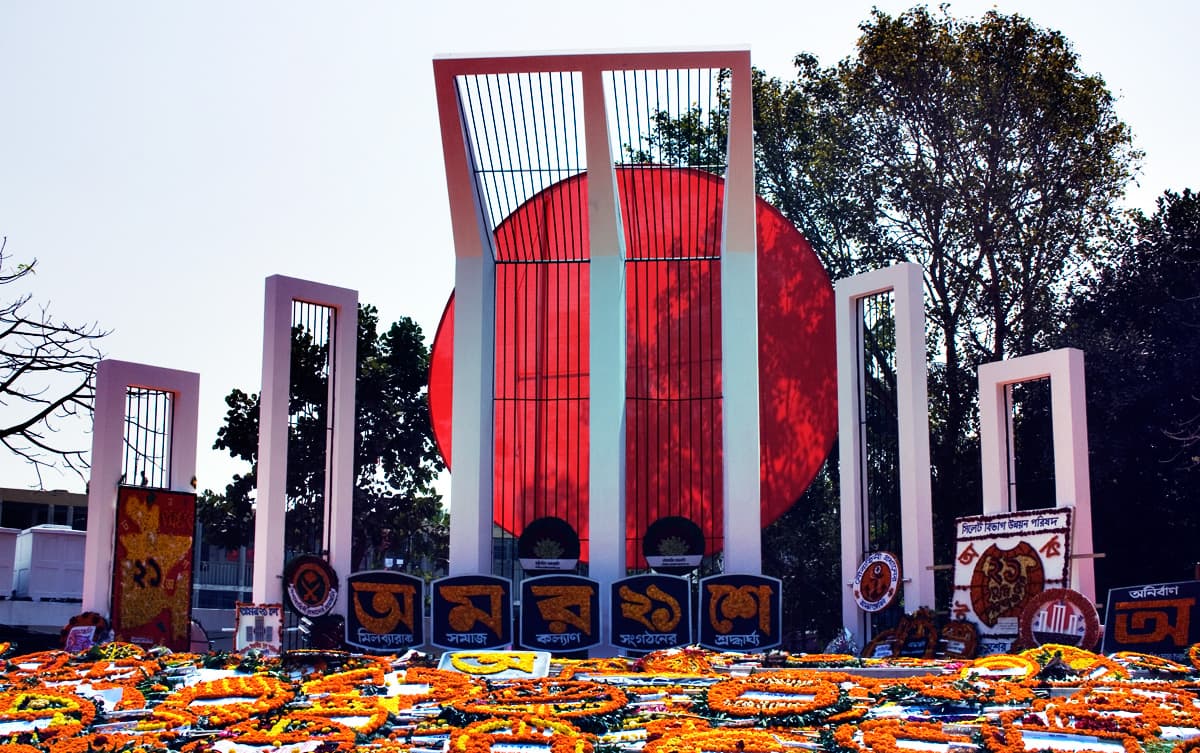
Central Shaheed Minar, the major memorial site of the Bengali Language Movement.
Mostaque Ahammed / Wikimedia CommonsTimeline Detail
The 1969 uprising transformed organized party demands into street power.
Students, workers, and citizens created a political climate that made democratic transfer of power unavoidable in principle but contested in practice.
The archive treats this as a movement map, with Dhaka as the central marker and national spread in the background.
The street became an institution.
The Dhaka marker reflects the urban center of the uprising, though the movement spread beyond the capital.
Mass politics became the pressure behind later military and political confrontation.