Credit: Wikimedia Commons
Bishnu Dey
Bishnu Dey was a prominent Bengali poet famed for স্মৃতি সত্তা ভবিষ্যৎ, উর্বশী ও আর্টেমিস, চোরাবালি.
Major Honors & Awards
Life and Literary Journey
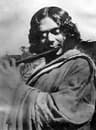
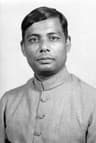
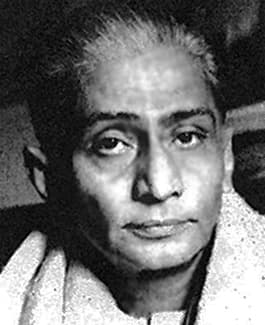
Bishnu Dey (July 18, 1909 – December 3, 1982) was a Bengali poet, writer, essayist, academician, art appreciator, and connoisseur in the era of modernism and post-modernism.
Bishnu Dey made seminal contributions to Bengali letters.
Key literary works include স্মৃতি সত্তা ভবিষ্যৎ, উর্বশী ও আর্টেমিস, চোরাবালি, নাম রেখেছি কোমল গান্ধার, তুমি শুধু ছবি.
Honors received include Jnanpith Award (1971), Sahitya Akademi Award (1965), Soviet Land Nehru Award.
Modern Bengali poetry originated between the two World Wars. This period was also marked by the escalation of the Indian independence movement.
The poverty of villagers and laborers and the unseemly affluence of some opportunists made the young generation hopelessly depressed. Young poets started writing in protest, in a new style. This literary crusade was championed by Bishnu Dey, Jibanananda Das, Buddhadeb Basu, Sudhindranath Dutta, Amiya Chakravarty, and others. These pioneers created and structured contemporary Bengali poetry in the post-Rabindranath era.
Bishnu Dey was steeped in his country’s lore; he was in tune with India’s traditions even as he wrote what might be called revolutionary poetry, both in form and content. Unquestionably, his poetry dealt with fundamental events at home and beyond. He wrote about his country and its men and women who suffered grievously throughout history but somehow remained unvanquished.
India’s music—especially Indian classical music and Rabindranath’s songs—was close to Dey’s heart. He translated poems written in the Santhal, Oraon, and Chhattisgarh languages through William Archer and Verrier Elwin. And yet, he was also an aficionado of Western classical music and, through his poetry, familiarized readers with this genre, as well as Western mythology, literature, and art.