Credit: Wikimedia Commons / Ragib Hasan
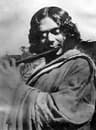
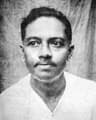
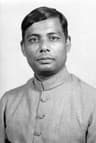
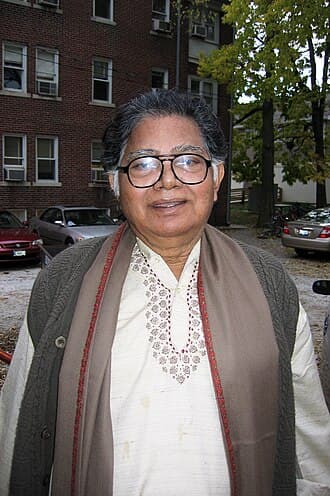
Sunil Gangopadhyay
One of the most prolific Bengali authors of modern times, founder of the seminal poetry magazine Krittibas, and creator of the Kakababu adventure series.
Major Honors & Awards
Life and Literary Journey
Sunil Gangopadhyay (7 September 1934 – 23 October 2012) was an Indian poet, novelist, short story writer, and critic. He played a key role in modernizing Bengali poetry and co-founded the 1953 avant-garde poetry magazine Krittibas. He has been called the most popular and prolific Bengali writer since Rabindranath Tagore, and "the man who carried the modern consciousness of Bengal."
He founded Krittibas magazine and authored landmark historical trilogies including Shei Shomoy, Prothom Alo, and Purbo-Poshchim.
He served as President of Sahitya Akademi from 2008 until his death in 2012.
Among others awards, he received the 1985 Sahitya Akademi Award for Those Days (Sei Somoy). Among the films adapted from Sunil's works are, Aranyer Din Ratri and Pratidwandi (both 1970), Sabuj Dwiper Raja (1979), Ek Tukro Chand (2001), Mishawr Rawhoshyo (2013), Yeti Obhijaan (2017), and Kakababur Protyaborton (2022). In 2008, he was elected president of Sahitya Akademi, narrowly defeating the Malayalam writer M.T. Vasudevan Nair.
His simple, clear and conversational approach to prose with dry humor has inspired writers in Bengal and beyond. Shankha Ghosh noted that Sunil’s use of contemporary language let readers see parts of themselves they may have not seen," or "perhaps did not want to see." By doing so, he transformed personal confessions into shared experiences. According to Sitanshu Yashaschandra, Sunil never abandoned the personal for the regional, nor did he forsake his "Bengaliness" to seek a broader identity. "He is a writer of international stature, simply because he is a writer, such a good writer," he wrote.