
Old Dhaka (1800–1947)
A rare visual archive of 19th and early 20th century Dhaka — from Charles D’Oyly’s 1814-1823 historical etchings to Fritz Kapp’s 1904 architectural panoramas of Lalbagh Fort, Chowk Bazaar, Pilkhana, and the Buriganga riverfront.
12 photographs
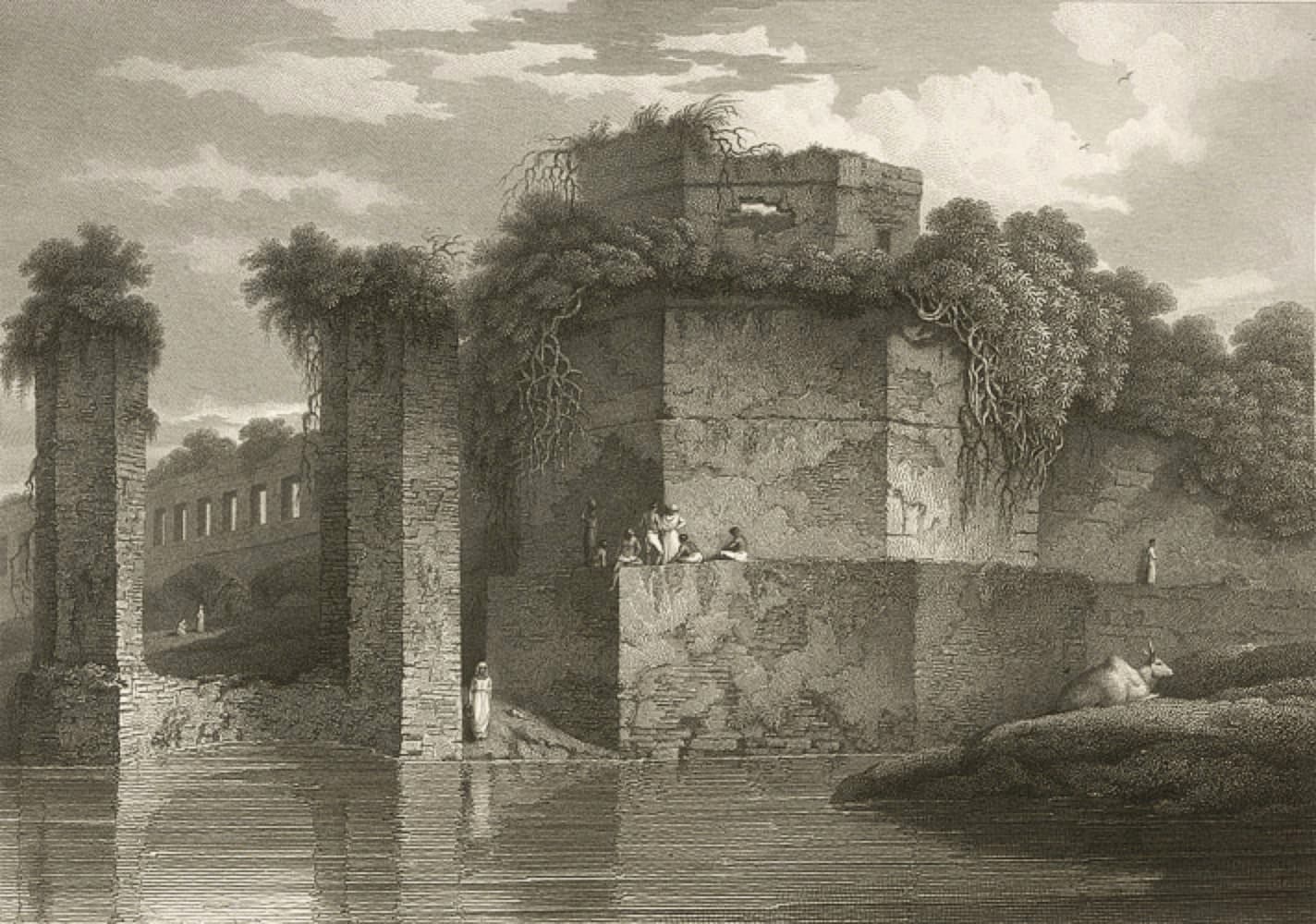
Etching of the octagonal corner bastion of Lalbagh Fort (Fort Aurangabad) in 1816 by Sir Charles D’Oyly.
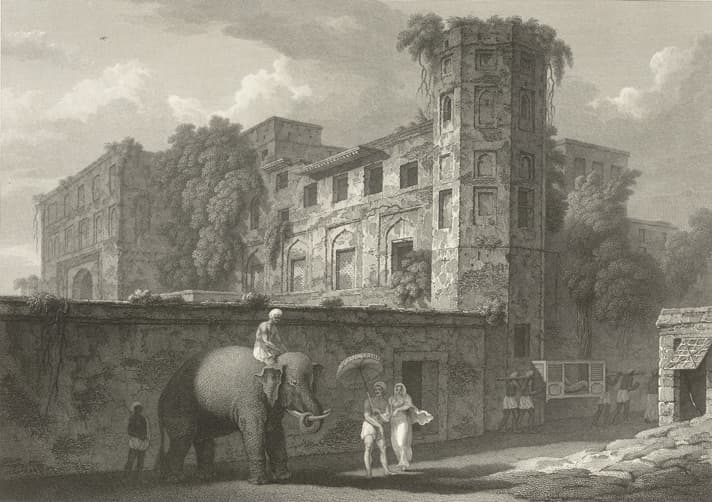
Bara Katra caravanserai along the Buriganga River in 1823, built in 1644 by Mughal Prince Shah Shuja’s Dewan Mir Abul Qasim.
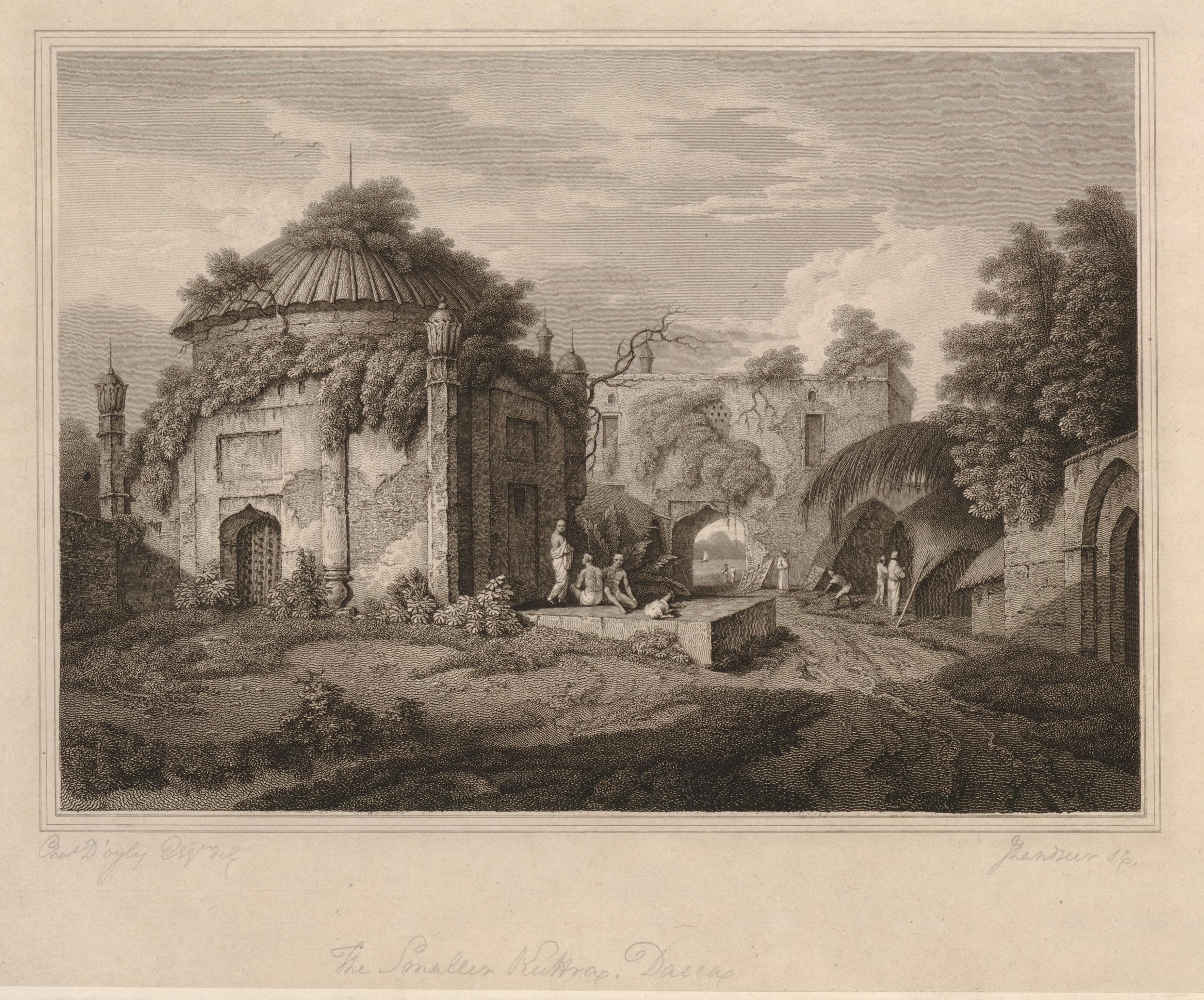
Choto Katra caravanserai with its enclosed single-domed mosque in 1817, erected in 1663 by Mughal Subahdar Shaista Khan.
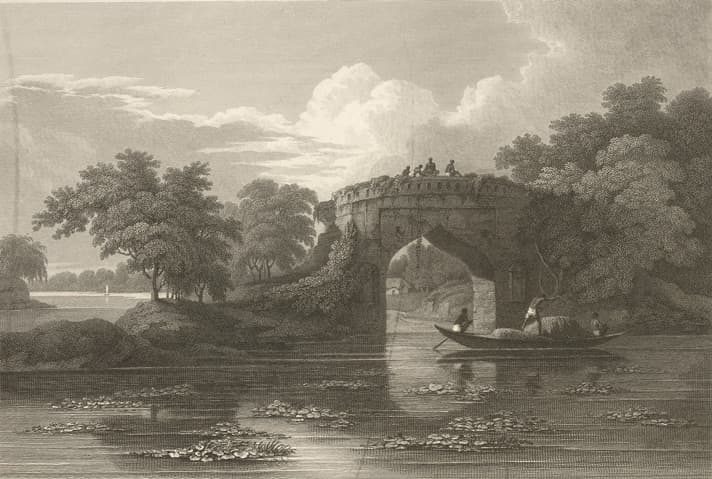
Remains of an ancient Mughal bridge over the Dholai Khal near Tanti Bazaar in 1814, sketched by Charles D’Oyly.
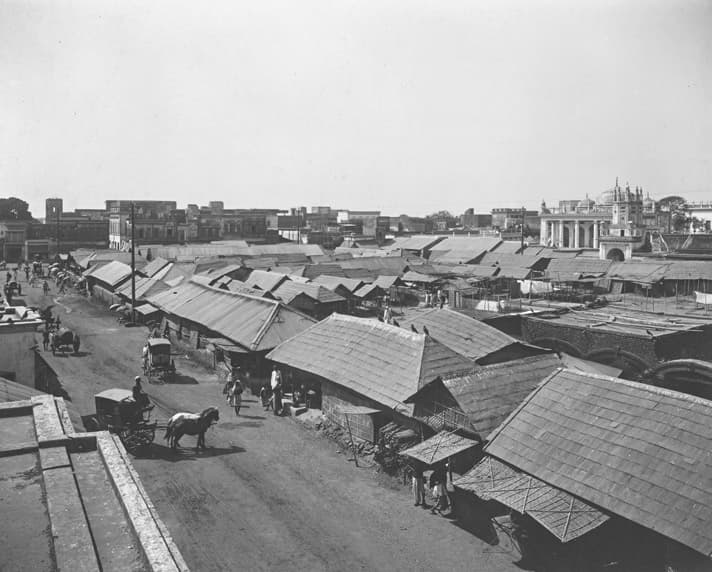
Chowk Bazaar in 1904, the historic Mughal commercial heart and central marketplace of Old Dhaka.
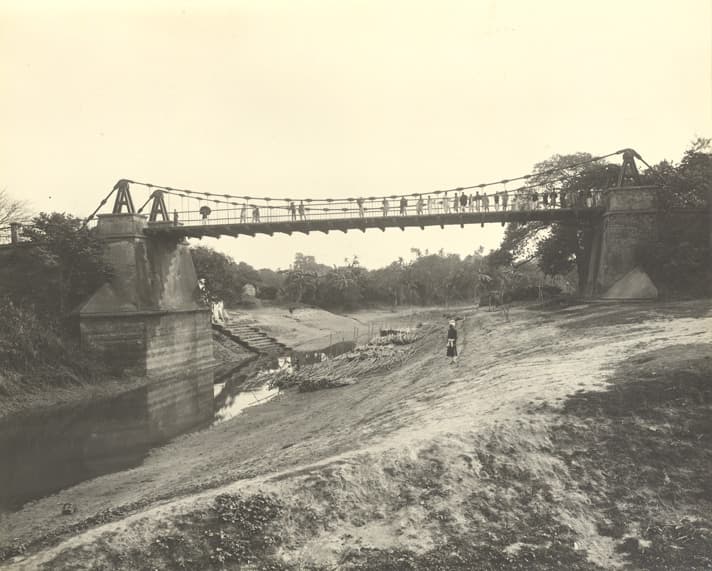
The iron suspension bridge over the Dholai Khal in Dhaka in 1904, designed by James Taylor in the 1830s.
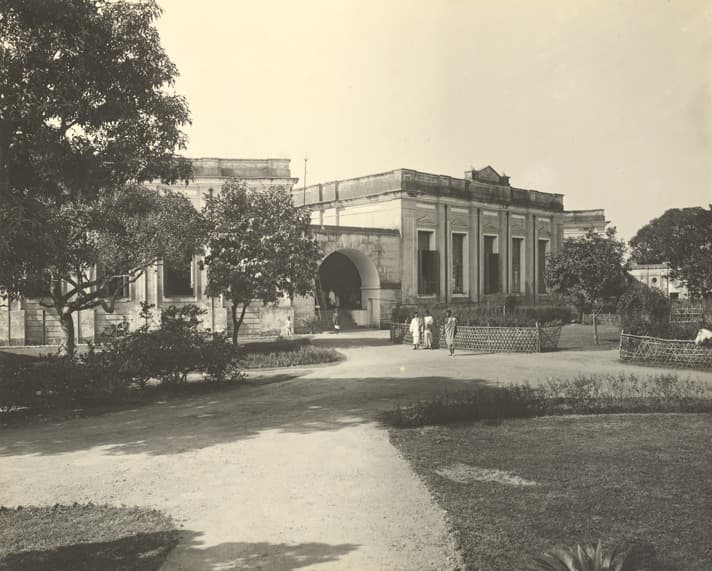
Mitford Hospital along the Buriganga River in 1904, established in 1858 following Robert Mitford’s bequest.
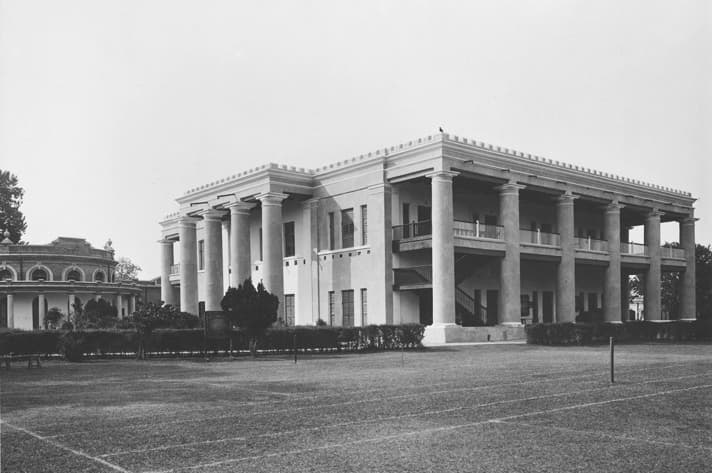
The historic Dhaka College building in 1904, founded in 1841 as the premier institution of higher education in Eastern Bengal.
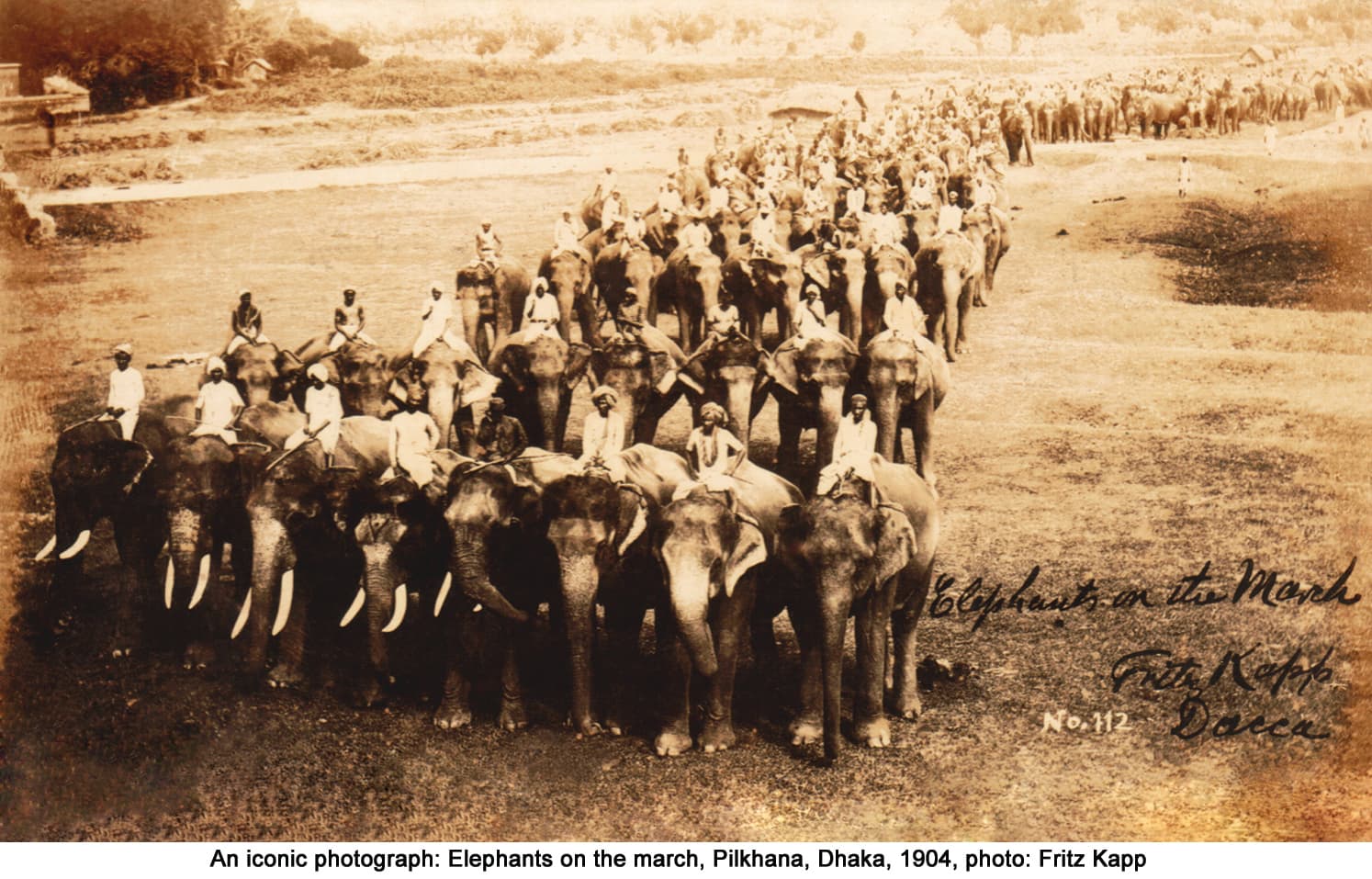
Elephants marching at Pilkhana in Dhaka in 1904, where the government elephant depot (Khedda department) was headquartered.
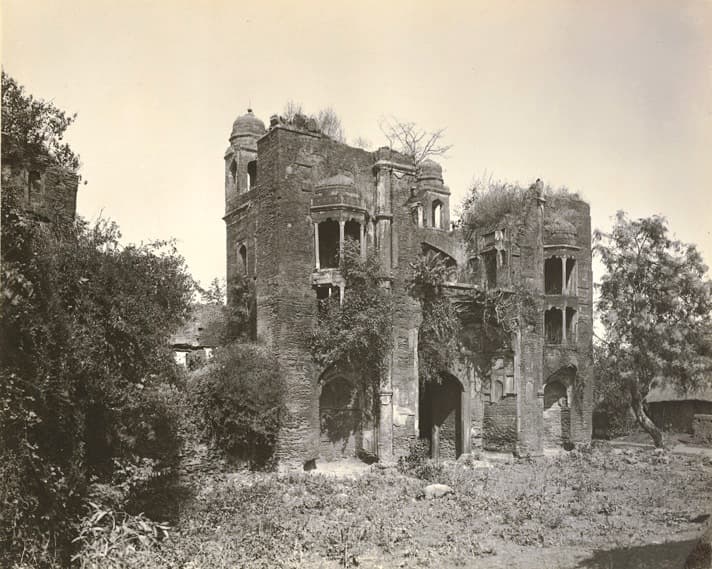
The imposing south gate of Lalbagh Fort in 1904, showing the grand three-storied gateway and flanking ramparts.
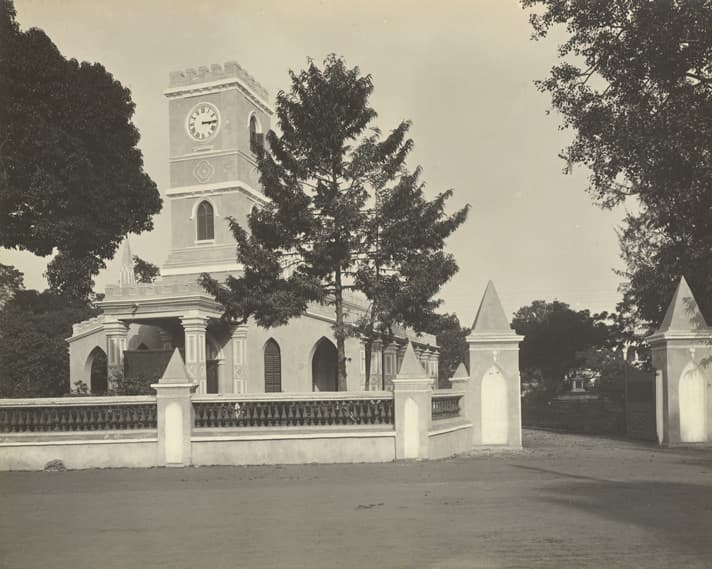
St. Thomas’s Church in Victoria Park (Bahadur Shah Park) area, consecrated in 1821 as Dhaka’s oldest Anglican church.
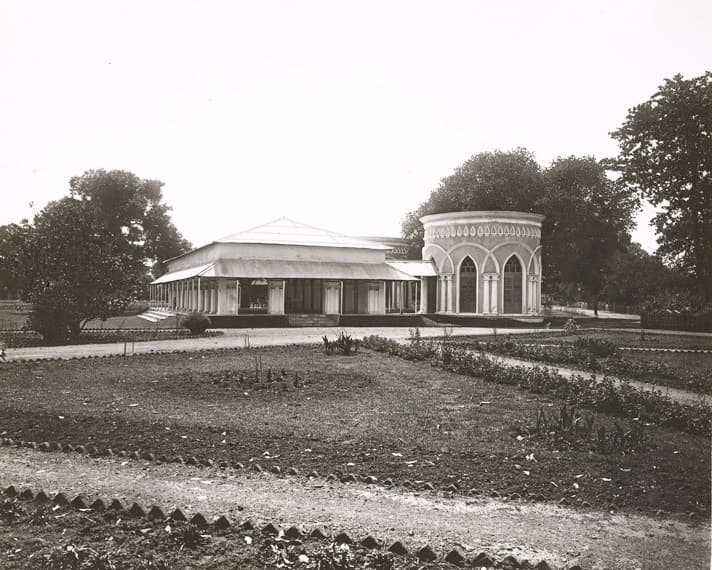
Nawab Sir Salimullah’s Shahbagh garden and pavilion in 1904, venue of the 1906 All-India Muslim Educational Conference where the All-India Muslim League was formed.