
The Tebhaga Movement
In 1946-47 sharecroppers across Bengal rose in the Tebhaga Movement, demanding to keep two-thirds of the crop instead of half or less.
Key Facts
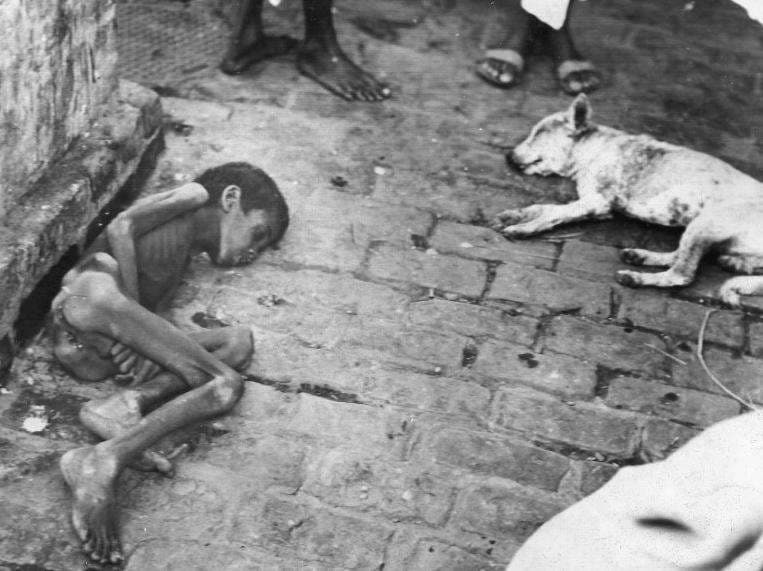
The 1943 Bengal famine claimed an estimated two to three million lives.
Wikimedia CommonsTimeline Detail
The Tebhaga Movement (from te-bhaga, 'three shares') demanded that sharecroppers keep two-thirds of the crop rather than the customary half or less.
In many localities armed volunteers collected the rice harvest and took it to the sharecropper's threshing floor, issuing written receipts for the landlord's third.
In districts such as Jessore, Dinajpur, Rangpur and Mymensingh, sharecroppers established 'liberated areas' (tebhaga elaka) for a time.
The movement showed the radical potential of the peasantry and strengthened communist organising before Partition.
Peasants who harvested the crop claimed their own share of it.
Marker approximates Rangpur, one of the movement's strongest districts.
Peasant radicalism in Rangpur and beyond carried into the rural politics of 1971.
Willem van Schendel, A History of Bangladesh (Cambridge University Press, 2009)