Credit: Wikimedia Commons / Fair Use
Ahmed Sofa
Uncompromising essayist, thinker, and novelist whose profound cultural analyses like Bangali Musalmaner Mon reshaped modern Bangladeshi socio-intellectual thought.
Major Honors & Awards
Life and Literary Journey
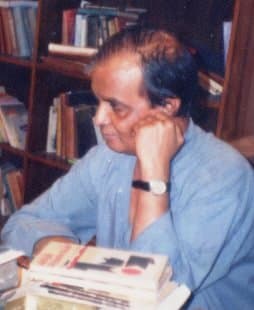
Ahmed Sofa (Bengali: আহমদ ছফা; 30 June 1943 – 28 July 2001) was a Bangladeshi writer, thinker, novelist, poet, philosopher and public intellectual. Sofa is considered by many, including National Professor Abdur Razzaq and Salimullah Khan, to be the most important Bengali Muslim writer after Mir Mosharraf Hossain and Kazi Nazrul Islam. A writer by occupation, Sofa wrote 18 non-fiction books, 8 novels, 4 collections of poems, 2 collections of short stories, and several books in other genres.
His philosophical essay collection Bangali Musalmaner Mon and novels Alatchakra (chronicling the 1971 war in Kolkata) and Gabhi Brittanto established his enduring legacy.
Characterized by “a freshness of language”, and "constant experimentation, and novelty" of subject matter and narration, his fictions portrayed Bangladesh with all its social, spiritual and political nuances. Critics acclaimed his intricate characterization depicting psychological and sociocultural subtleties with realism. Abul Fazal, and many others considered Sofa's Omkar (The Om, 1975) the best literary expression of the liberation movement of Bangladesh. Gabhi Bittanta (A Tale of a Cow, 1995), a novel satirizing university teachers involved in party politics and corruption is among the best satires in Bengali literature. Pushpa Briksa ebang Bihanga Puran (Tales of Flowers, Trees, and Birds, 1996) recounts Sofa's spiritual attachments with birds, plants and trees reflecting his profound biophilia and ecoconsciousness. Some of his long poems include Ekti Prabeen Bater Kache Prarthana (Prayer to an Ancient Banayan Tree, 1977), and Basti Ujar (The Eviction of the Shanti Town Dwellers), etc.
Sofa and his works guided, inspired, influenced, and continue to inspire and influence many writers, filmmakers, painters, artists, and intellectuals including Humayun Ahmed, Muhammed Zafar Iqbal, Tareque Masud, Farhad Mazhar, Salimullah Khan, etc. He remains one of the most powerful intellectual influences in Bangladesh through his works and legacy. For a bohemian lifestyle, and outspoken nature, Sofa was a controversial figure during his lifetime. He was called rebel, mad, insolent, devoid of respect for authority, and an overly uncompromising figure among the intellectuals. Never to be co-opted by the establishment, Sofa rejected Lekhak Shibir Award in 1975, and Sa'dat Ali Akanda Award offered by Bangla Academy in 1993. He was awarded Ekushe Padak posthumously by the Government of Bangladesh in 2002.