Credit: Wikimedia Commons / Public Domain
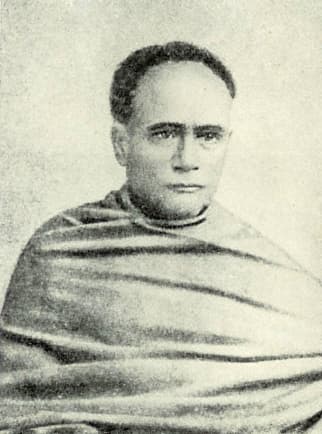
Iswar Chandra Vidyasagar
The father of modern Bengali prose, pioneering educator, and social reformer who authored the Bengali primer Barnaparichay and championed widow remarriage.
Major Honors & Awards
Life and Literary Journey
Ishwar Chandra Vidyasagar (26 September 1820 – 29 July 1891) was an educator, social reformer, and key figure of the Bengal Renaissance.
He simplified and reconstructed the Bengali alphabet, authoring Barnaparichay, which remains the cornerstone primer for learning Bengali.
Vidyasagar spearheaded the movement that led to the Hindu Widows Remarriage Act XV of 1856 and established 35 schools for girls across Bengal.
He was renowned as one of the principal proponents of the Bengal Renaissance. He was the most prominent campaigner for Hindu widow remarriage, petitioning the Legislative Council despite severe opposition, including a counter-petition (by Radhakanta Deb and the Dharma Sabha) which had nearly four times as many signatures. Even though widow remarriage was considered a flagrant breach of Hindu customs and was staunchly opposed, Lord Dalhousie personally finalised the bill, and the Hindu Widows' Remarriage Act, 1856, was passed. Against child marriage, the efforts of Vidyasagar led to the Age of Consent Act, 1891. In which the minimum age of consummation of marriage was 12 years.
He excelled in his undergraduate studies of Sanskrit and philosophy. The Sanskrit College and University, where he studied, gave him the honorific title Vidyasagar ('Ocean of Knowledge'; from the Sanskrit विद्या, vidyā, 'knowledge' and सागर, sāgara, 'ocean').