
Bengal Famine of 1943
A catastrophic wartime famine killed an estimated two to three million people in Bengal, exposing the failures of colonial administration and reshaping rural Bengal.
Key Facts
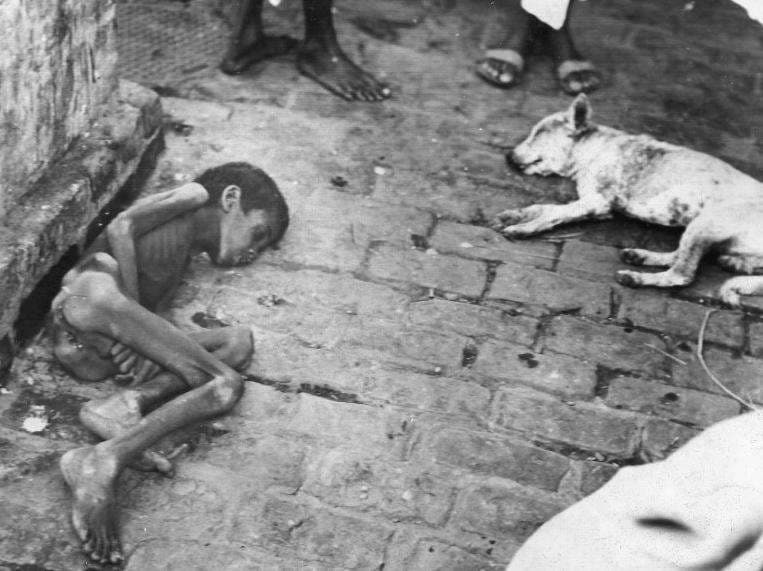
The 1943 Bengal famine claimed an estimated two to three million lives.
Wikimedia CommonsTimeline Detail
The famine combined wartime disruption, grain price inflation, and administrative neglect rather than a simple shortfall of rice.
Rural labourers, artisans and smallholders were hit hardest as their purchasing power collapsed.
The memory of hunger became part of the region's politics of food, relief and self-rule in the decades before 1971.
Hunger taught Bengal why self-rule must include food and relief.
The marker uses Dhaka as the administrative centre of a famine that was national in scale across Bengal.
Food insecurity and rural displacement remain part of the background to the later autonomy and 1971 struggles.