
Paharpur and Somapura Mahavihara
In the 9th century the Pala kings built Somapura Mahavihara at Paharpur in north-western Bangladesh, one of the largest Buddhist monasteries in the world at the time.
Key Facts
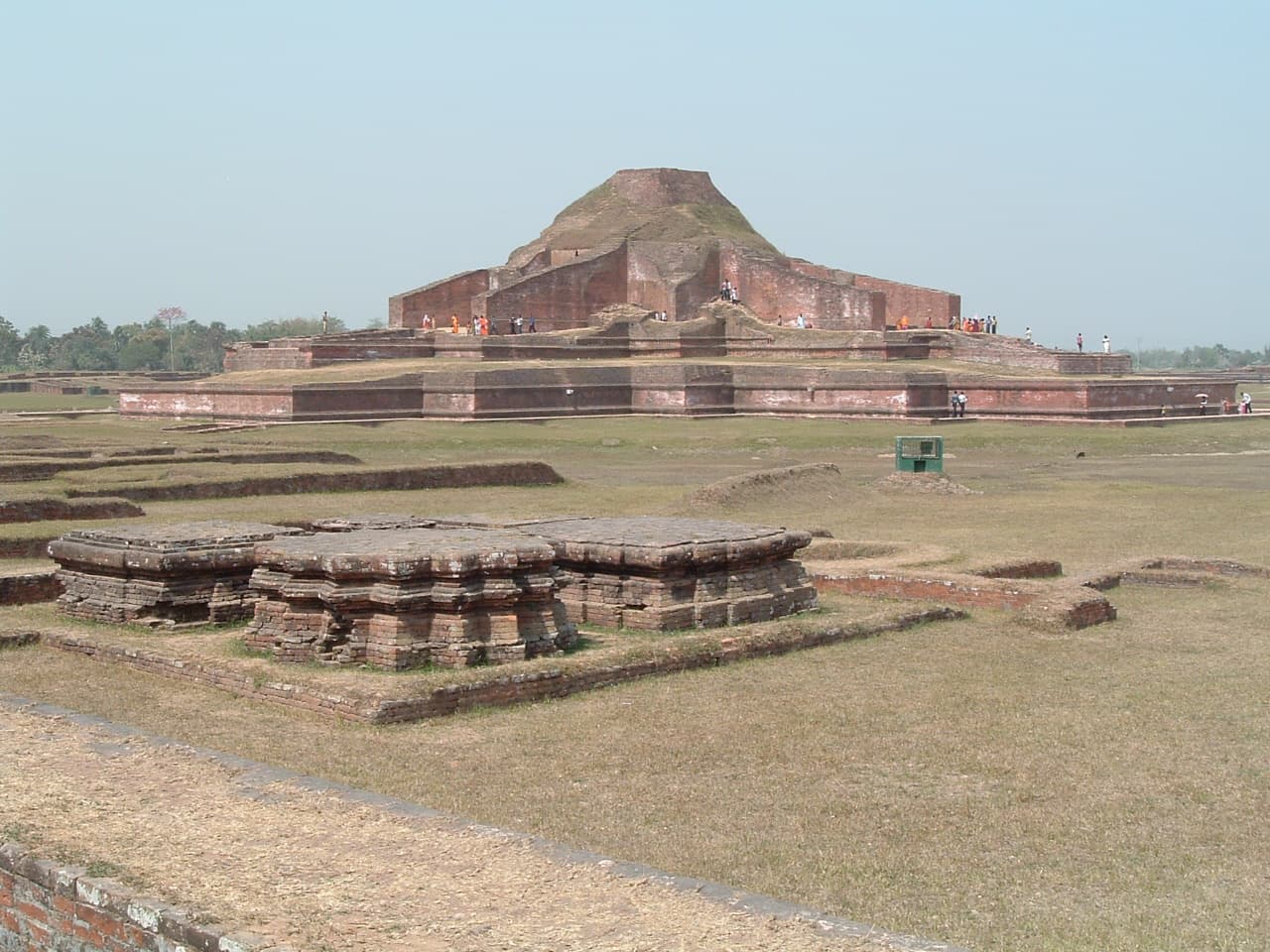
Somapura Mahavihara at Paharpur, one of the strongest map anchors for Pala-period Buddhist Bengal.
Subarashitours / Wikimedia CommonsTimeline Detail
Somapura Mahavihara, 'the Great Monastery of Somapura', was built at Paharpur in what is now Naogaon district during the Pala period, around the 9th century.
Its vast brick monastery, around 21 hectares with 177 cells, a central cruciform stupa, temples and shrines, made it a hub of Buddhist learning.
Paharpur's plan and sculpture connected the delta to Buddhist traditions across South and South-East Asia.
Today the site is a UNESCO World Heritage Site and a powerful witness to the Buddhist centuries of Bengal's past.
A field of silent bricks keeps alive the memory of Bengal's great Buddhist monastery.
Marker at the Somapura Mahavihara ruins in Naogaon district.
A pre-modern monument; its region later falls within the war maps of Rajshahi and the north-west.
Willem van Schendel, A History of Bangladesh (Cambridge University Press, 2009)